
Write the Vision

Issue 001
Assignment, Endurance & Becoming
Between the calling and the becoming is the courage to endure.

Introduction
There are seasons when calling feels inspiring — full of clarity and momentum. And there are seasons when it feels weighty.
Issue 001 of Write the Vision emerges from the latter.
Assignment, Endurance & Becoming is a curated reflection on the sacred tension between what
God has spoken and what life has required. In these pages, women of faith explore the cost of obedience, the discipline of staying, and the quiet work of becoming who they were always intended to be.
This is not a collection of surface testimonies. It is a literary journal shaped by process — by wrestling, by responsibility, by waiting, and by resilience. Each voice speaks from formation, not performance.
If you are navigating your own assignment…
If endurance feels unseen…
If you are still becoming what you once prayed for…
This issue is for you.
In This Issue
• From the Editor — A Weighty Yes
• Scripture Meditation
• Evangelist Marveletta The Assignment
• Meditation — Before the Becoming
• Rev. Heather Wills — Running With Endurance
• On Obedience — The Cost of a Quiet Yes
• Meditation — The Discipline of Staying
• Minister VanQuitta Joyner — Completing the Work Within
• Meditation — Completion Before Commission
• Still Becoming — On Reinvention After Collapse
• Closing Benediction
A Weighty Yes

From the Desk of Airad Redd
Founder & Editor, Write the Vision
There are seasons when vision feels exciting — fresh, new, full of possibility.
And then there are seasons when vision feels weighty.
This issue was born in the latter.
As the submissions began to arrive, a common thread emerged without instruction or prompting. Each voice reflected on assignment. Each writer spoke of endurance. Each testimony carried the quiet tension of becoming.
Not becoming in theory — but becoming through life.
Through disappointment.
Through scrutiny.
Through wrestling with identity.
Through the decision to keep running when quitting would have been easier.
Issue 001 of Write the Vision is not about spectacle. It is about stewardship.
It is about the sacred responsibility of accepting what God has placed in your hands. It is about understanding that assignment does not always come with applause. It often comes with process.
Our contributors remind us that endurance is not dramatic. It is daily. It is choosing obedience when no one is watching. It is accepting both what God has for you and what God has asked of you.
Becoming is rarely loud. Sometimes it looks like unbecoming first. Shedding false identities. Releasing fear. Letting go of the version of yourself that survival created.
This issue is for the woman who knows she is called.
For the woman who is tired but still running.
For the woman who understands that saying yes to purpose means saying no to comfort.
For the woman who has learned that endurance and discernment can coexist.
May these pages meet you in your process.
May they affirm your assignment.
May they strengthen your endurance.
And may they remind you that becoming is holy work.
With gratitude and vision,
Airad Redd
Founder & Editor
Write the Vision
“Let us run with perseverance the race marked out for us…”
Hebrews 12:1–2
A contemplative pause on endurance and alignment.
“When I became unafraid to be, I became me.”
The Assignment
A prophetic reflection on unbecoming the lies of the past and embracing divine assignment through revelation and resilience.
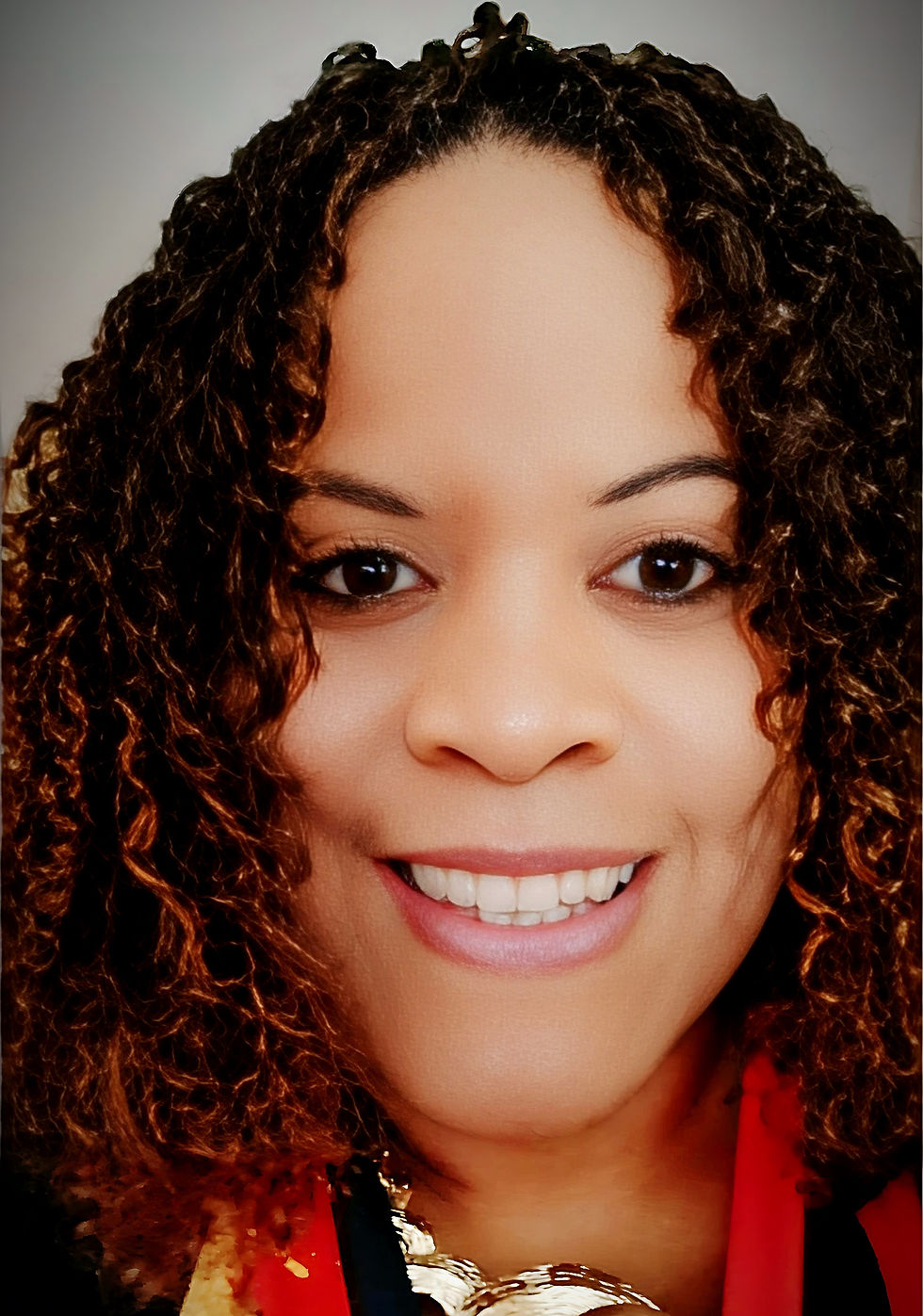
Evangelist Marveletta Kirk is a preacher, teacher, and author whose writing flows from deep spiritual revelation and lived experience. With a prophetic voice rooted in Scripture, she ministers healing, identity, and spiritual awakening through the written and spoken Word. Her life’s message centers on unbecoming. the lies of the past and becoming who God ordained from the beginning.
I am truly grateful to be a part of this assignment because
it prompted me to ask hard questions. I began to realize
there were some gaps in the journey from vision to the
manifestation of purpose. The development of this piece
led to the identification of where those gaps exist. The
finished product could not be influenced by my own
knowledge, skill, attitude, or opinions.
I first had to be clear that the expectations I must meet
exceed my natural ability. “Penspiration,” as I came to
dub it, depended primarily on revelation to confirm what
is already in my spirit. Divine inspiration through the
Holy Spirit became essential.
I was reminded of Jeremiah 1:5: “I knew you before you
were in your mother’s womb.” Realizing that mankind’s
primary state of being is spirit, it registered that the Father
placed in me—before the foundation of this world—
everything He wanted to come out on the other end of this
pen. When completed, my response would edify the Body
in a way that contributes to the development of spirit
through the words of the Chosen of God. Just as the
Living Word was announced through revelation, the
people of God have become precepts and lines that
represent the Living Word of God.
Being a naturally creative person, I have always
harnessed a vivid imagination. I saw and responded to life
much differently than the mainstream. Public opinion
labeled “different” as weird. My kind of “different” was
not always favorably received and weighed heavily
against my ability to wholeheartedly embrace who I am
and my particular offerings to society.
As early as pre-adolescence, the Spirit helped me navigate
thriving in a space where I was hated and bullied daily by
the very person I depended on for nourishment and
consolation. I also became acquainted with isolation and
ostracism—even though I lived in a two-parent household
with nine siblings. These were conditions I did not
understand at the time. However, in the fullness of time,
reconciliation of these experiences helped shape my
response and posture toward the assignment.
The pen became my friend.
The only danger in living in this reserved place of
isolation as a means of “protection” is that it created a
personal prison for me. I built a fortress around myself.
Not only did I not want to be seen or heard, it became
quite uncomfortable—and still is—to be out front. To use
my experiences, my words, my thoughts, my fears, and
my intuition as a relatable tool of encouragement for
others was overwhelming.
In understanding, accepting, and adapting the right
response to the call, the Holy Spirit began walking me
through the process of unbecoming. Words were spokenover me. My paternity, my birth, my true identity—these
were all secrets until the age of seventeen. Everything
about me was under scrutiny. I wanted to hide from the
world as a tortured soul.
Just as in this writing process, the Holy Spirit used three
things from the Word of God to define, develop, shape,
and mold me into who I am today. I will briefly explain
them, as they are key to my personal development in the
commission of this assignment.
A Mule
In the Gospel of Luke, Jesus instructed the disciples to
find a colt tied up—one that had never been ridden. When
the owner inquired, they were to say, “The Lord has need
of thee.”
What this spoke to me was that society assigns us a “lot,”
an “identity,” or a “journey” in life based on its perception
of our worth. However, the Father knows our worth and
has predestined to loose us from the bondage of societalcomplacency. I realized my value in the Lord—He
thought I was worth dying for. His perfect will loosed the
chains of life’s experiences and propelled me into destiny.
Through daily communion with the Father by way of the
Holy Spirit, I began to realize that my writings—my
medicine, my place of peace and solitude—were being
uncovered. My initial response was, “Lord, this is all I’ve
got. This is what keeps me motivated, encouraged, and
uplifted. This place is my refuge.”
Yet reality suggested this was where I was most
vulnerable. It was the weak spot from which I drew my
strength. Now the door was open, and fear, anxiety, and
dread crept in. What would people think?
I felt as though I had been in a deep well, screaming at the
top of my lungs, and nobody heard me—only to find out
that people were listening. All my insecurities surfaced.
To get through it, I had to harness the mind of Christ: Not
my will, but Thine be done.
A Well
In John 4:11, the woman said, “Sir, the well is deep, and
you have nothing to draw with. From where then will you
get this living water?” I believe in that moment she
understood that she was the well from which living water
would flow.
I cannot explain what the revelation of that conversation
did in me. I was completely changed. I am the woman
who lives at the well. I have dwelled there in the spirit
realm for many years. I still find my identity there.
In writing, rivers of living water flow by way of the pen
to quench the thirst of those in need of refreshing, revival,
and cleansing—things that can only come from the living
waters of the Word of God. Out of our bellies flow living
water that brings forth life. We are part of the greater
works Jesus said would be done in the earth.
We pour from our relationship with the Father, Son, and
Holy Spirit into the cup of loneliness, despair, depression,
anxiety, and illness in others. In doing so, we encourage,
edify, minister, and prove what is the perfect will of God.
As 2 Corinthians 1:3–4 reminds us, we are comforted so
that we may comfort others.
A Wreck
In Acts 27:44, there was a shipwreck. Those who could
swim were instructed to swim to safety. Those who could
not were told to grab hold of the broken pieces of the ship
to guide them safely to shore.
It is the “broken pieces”—in human form—that become
valuable to the lost, downtrodden, and those spiritually,
physically, and mentally impaired. They remind others
that they are not alone. They can survive and thrive under
extreme circumstances. They can experience victory
instead of victimization.
So it is that I conclude this journey to becoming first
began with unbecoming the lies the enemy told and
learning to walk in the truth of God’s glory.
My response to the calling is a resounding YES.
When I became unafraid to be,
I became me.
SHE Chronicle, 2018
Before the Becoming
“Before I formed you in the womb I knew you…” Jeremiah 1:5
There is a version of you that existed before your fear did.
Before the mislabeling.
Before the rejection.
Before the survival instincts.
Before the roles you learned to play in order to be accepted.
Scripture tells us that before Jeremiah ever opened his mouth, before he doubted his ability, before he protested his youth — he was known. Not casually observed. Known. Intimately. Intentionally. Purposefully.
Assignment does not begin when we recognize it. It begins when God decides it.
And yet most of us do not struggle with whether we have an assignment. We struggle with the version of ourselves that must emerge in order to carry it.
Becoming is rarely glamorous. It feels less like transformation and more like confrontation. We are confronted with our limitations. Confronted with our wounds. Confronted with the ways we have allowed disappointment to define us.
We often assume purpose will feel empowering from the start. But more often, it feels exposing.
Before Isaiah declared, “Here am I, send me,” he first cried out, “Woe is me.” Before Peter preached boldly, he wept bitterly. Before leadership came revelation. Before revelation came reckoning.
There is a holy discomfort in realizing that the person you have been is not the person you were created to remain.
Becoming requires shedding.
Shedding the narratives that were placed on you.
Shedding the silence that kept you small.
Shedding the false humility that disguised fear.
God’s knowing precedes your awareness.
That means your assignment is not fragile. It is not dependent on your confidence. It does not disappear because you hesitate. It waits. Patiently. Persistently.
Some of us have spent years negotiating with what heaven already settled.
We call it delay.
God calls it development.
Becoming begins when we stop arguing with what God has already decided about us.
Not when we feel ready.
Not when we are applauded.
Not when the path is clear.
But when we finally agree.
“Running with endurance does not mean saying yes to everything—it requires discernment.”

Running With Endurance
An honest meditation on perseverance, discernment, and accepting responsibility for one’s calling in both faith and justice.
Rev. Heather Wills is an ordained Elder in the AME Zion Church and serves as Associate Minister at
Greater Walters AME Zion Church in Chicago, Illinois. She is the Justice Collective Local and Conference Coordinator for the Michigan Annual Conference, equipping communities with education and empowerment around civic engagement and social responsibility. A lifelong community organizer, Rev. Wills also serves as Deputy Director of the Workers’ Center for Racial Justice and remains actively involved with the National Council of Negro Women, the Poor People’s Campaign, and the Order of the Eastern Star.
“Therefore, since we are surrounded by such a great cloud of witnesses, let us throw off everything that hinders and the sin that so easily entangles. And let us run with perseverance the race marked out for us, fixing our eyes on Jesus, the pioneer and perfecter of faith. For the joy set before Him He endured the cross, scorning its shame, and sat down at the right hand of the throne of God. Consider Him who endured such opposition from sinners, so that you will not grow weary and lose heart.”
Hebrews 12:1–3 (NIV)
It took life lessons for me to learn what it means to run with endurance. As Vice President Kamala Harris says in her book The Truths We Hold, “Let’s not throw up our hands when it’s time to roll up our sleeves.” To me, this is endurance.
I cannot give up—even when I want to. Even when the task is hard. Even when giving up would be easy. I cannot give up.
I was raised by a strong Black woman and a strong Black man in a strong Black household, rooted in a strong Black family. I was therefore grounded in principles that I carry with me, one of which is always doing my best.
Have I always done my best? No.
There were instances when I didn’t fully apply myself—like in my first two years of college. There were moments when I threw in the towel in agonizing defeat—like after I ran for office. There were times when I tried to give my best, but others didn’t see it that way—like during my denominational ministry studies.
I have had my fair share of triumphs, but they all came with tears. Triumphs require endurance, and tribulations do too.
After all these life lessons, I have decided that it is more important for me to give my all than it is to win, to be recognized, or even to be seen. Running with endurance is
between me, God, and my conscience. That small voice of calm within me is the true determinant of my run and my endurance.
At nearly 40 years old, I often hear my mother’s voice in my head: “Just keep living.” It didn’t make sense to me then. But now—oh, does it ever.
As a teenager, I was certain I understood the world around me. In my twenties, I was confident I had firm footing in who I was, despite my circumstances. Now, as I close out my thirties and prayerfully “keep living,” I am more willing than ever to embrace the lessons of life.
The lessons of being tired and worn out.
The lessons of boundaries—mine and others’.
The lessons of my own shortcomings, desires, hesitations, thoughts, feelings, and experiences.
I am more respectful of how my environment impacts my energy, my thinking, and even my outcomes. I am more attuned to my trepidation, my lack of understanding, and even my unwillingness.
I say “no” just as much as I ever did, but now it comes with understanding. If something does not fit into my lifelong run, I cannot be involved. Running does not mean saying yes to everything. Running with endurance does not mean the absence of discernment.
Entering my forties—this faux halfway point of life—has humbled me. I am still feisty, but I no longer stand as unshakable as I did in my twenties. Back then, I thought I
was as solid as a chain-link fence. Then life taught me that fences are only planted about six feet deep. When a tornado comes through, they can be uprooted and never
seen again.
Now, I want to be more than a tree planted by water—pliable in the storm, yet unmovable in my foundation.
My assignment—my purpose, this calling on my life—has always been both my greatest joy and my greatest burden. I am unable to tuck away my voice or remove myself emotionally from the cares of our world.
On the days when I would rather stay in bed than fight for social justice, my endurance feels thinnest—as thin as a communion wafer at the bottom of the bag. Brittle.
But my assignment, coupled with that small voice of calm — which sometimes becomes a raging wind of conviction — keeps me running this race. The lessons my family and community instilled in me keep me running this race. The understanding that if I don’t do it, God will find someone else keeps me running this race.
This is not a perfected response or a final resolution for future encounters. Recognizing both my assignment and the work it requires is simply a daily reminder of who I am, what I am called to do, and to whom I am accountable.
Running with endurance is taking responsibility for what I give to the world. It is my measure of accountability and my daily dose of reassurance to keep going.
I accept my shortcomings, my doubts, and even my denials. I accept in advance that I won’t always get it right. But I also accept my abilities, my relationships, and most of all, my assignment.
I accept what God has for me.
And I accept what God has asked of me.
That is how I have stayed in step with my assignment.
It is my prayer that you will live in harmony with your assignment and that you will find peace on this daily journey of faith, understanding, and work.
Yours in peace and love,
Rev. Heather Wills
On Obedience
The Cost of a Quiet Yes
By Airad Redd
There is a version of obedience that is loud.
It posts.
It announces.
It performs.
And then there is the obedience no one sees.
The quiet yes.
The yes that does not come with a microphone.
The yes that does not come with immediate reward.
The yes that often feels heavier than the no.
We romanticize calling, but we rarely discuss the weight of sustaining it.
Obedience is not proven in inspiration. It is proven in continuation.
It is easy to say yes in a moment of clarity. It is harder to remain yes when clarity fades and responsibility remains.
The Scriptures are filled with people who said yes — but what distinguished them was not their initial agreement. It was their endurance.
Abraham left, but he also waited.
Joseph dreamed, but he also endured imprisonment.
Mary accepted, but she also carried.
The quiet yes is not emotional. It is anchored.
It does not ask daily whether the assignment still feels exciting. It asks whether the assignment is still true.
There is a difference.
In this inaugural issue, our contributors write from places of formation — not fantasy. They speak of wrestling, of delay, of responsibility. They remind us that obedience is rarely convenient.
But obedience shapes us in ways comfort never could.
It matures our motives.
It clarifies our identity.
It strips performance from purpose.
The cost of a quiet yes is often invisibility.
But the reward is alignment.
Alignment with who God knew before we did.
Alignment with the race marked out.
Alignment with work that outlives applause.
The question is not whether you are called.
The question is whether you are willing to remain.
Obedience is not dramatic.
It is steady.
And steady faith builds legacy.
The Discipline of Staying
“Let us run with perseverance the race marked out for us…” — Hebrews 12:1
Endurance is quieter than we expected.
We imagined it would feel heroic — like conquering mountains or breaking chains. But endurance often feels like waking up again and choosing obedience when nothing about the day feels inspiring.
It is not glamorous to stay.
It is not celebrated to remain when others leave.
It is not applauded to keep building when the progress is slow.
The writer of Hebrews says the race is “marked out.” That phrase carries weight. It suggests intention. Boundaries. Design.
This race was not randomly assigned.
Which means the terrain you face is not accidental.
There are seasons when quitting feels reasonable. When stepping back feels wise. When surrendering feels easier than pressing forward.
But there is a difference between rest and retreat.
Rest restores.
Retreat avoids.
Discernment becomes essential here.
Endurance does not mean forcing yourself through burnout. It does not mean ignoring wisdom or rejecting boundaries. It means understanding that discomfort does not automatically signal misalignment.
Jesus endured the cross “for the joy set before Him.” Endurance is sustained by vision. Without vision, suffering feels pointless. With vision, it becomes purposeful.
The discipline of staying is not about stubbornness. It is about clarity.
Clarity about who called you.
Clarity about why you began.
Clarity about what would be forfeited if you walked away too soon.
Some breakthroughs are not dramatic. They are incremental. Quiet. Built through consistency no one sees.
Staying when it would be easier to disappear.
Staying when affirmation is scarce.
Staying when the assignment feels heavier than your strength.
Endurance reshapes us.
It humbles us.
It matures us.
It refines our motives.
And sometimes, the victory is simply that you did not quit.
“Running with endurance does not mean saying yes to everything—it requires discernment.”

Completing the Work Within
A testimony of healing, completion, and stepping into purpose after seasons of delay and hidden preparation.
Minister VanQuitta Joyner, known as “Beacon of Light,” is a transformational life coach, minister, author, and speaker devoted to guiding others toward healing and their God-given purpose. Rooted in faith and refined through personal testimony, she equips individuals to embrace restoration and walk in spiritual alignment. Through coaching, ministry, and youth empowerment, she reminds others that their preparation is divinely connected to their promise — because healing is holy and purpose is intentional.
Having an assignment attached to my life has not been an easy journey. I can recall spending the majority of my life trying to avoid that very assignment. The toughest part for me was not recognizing that I had one — it was accepting the things that happened to me along the way and understanding how they were shaping me to step into it.
Many times, we pray for purpose, yet resist the process.
I remember what I endured and the path I had to walk in order to heal. The road was not easy, and I will admit there were seasons when giving up felt like the only option. I grew tired. I questioned. I doubted.
There was even a period when I sat idle for seven whole years.
Seven years.
At the time, it felt like stagnation. It felt like delay. It felt like I had somehow missed God.
But the spiritual meaning of the number seven represents completion and divine alignment. Scripture often associates seven with fullness and finishing — from the seven days of creation (Genesis 2:2–3) to the call to forgive “seventy times seven” (Matthew 18:22), which reflects a complete work of grace.
Looking back now, I can see those seven years were not wasted.
They were completing something in me.
God was finishing what people could not see. He was strengthening what I could not yet articulate. What felt like stillness was actually preparation. As Ecclesiastes 3:1 reminds us, “To everything there is a season, and a time for every purpose under heaven.”
One thing I can say with certainty is that I am grateful I did not walk away.
Growing up, I often heard people say, “It’s one thing to hear others talk about how God made a way for them, but once you get to know Him for yourself, it is a totally different experience.” I used to nod in agreement, but now I understand it in a way I could not have understood before.
There is a difference between hearing about God and knowing Him through survival.
There is a difference between quoting Scripture and living it.
Psalm 34:8 says, “Taste and see that the Lord is good.” You cannot taste for someone else. You must experience Him for yourself.
I have learned that obedience truly is better than sacrifice (1 Samuel 15:22). Sacrifice can look impressive. It can look noble. But obedience requires surrender. It requires trust when you cannot trace what God is doing.
And trust is what carried me through those silent years.
As I have stepped into my calling — first as a life coach and now as a minister — I can clearly see how everything I went through was necessary for my assignment. The heartbreak. The confusion. The waiting. The healing. None of it was random.
Romans 8:28 declares that “all things work together for good to those who love God and are called according to His purpose.” I now understand that calling and process walk hand in hand.
I had to sit in darkness so I could appreciate the light.
I had to wrestle with my own fears so I could help others confront theirs.
I had to heal privately so I could minister publicly.
John 1:5 says, “The light shines in the darkness, and the darkness has not overcome it.” I now know this to be true — not just as Scripture, but as testimony.
Because I have walked through the darkness, I can now help others bring their light out of it too.
My assignment was never just about me.
It was about the people I would encounter.
The lives I would touch.
The testimonies I would carry.
Completion came before commission.
And now, I walk forward knowing that every step — even the delayed ones — were ordered.
Completion Before Commission
“Being confident of this, that He who began a good work in you will carry it on to completion…” —Philippians 1:6
We are often eager for commission.
We want the sending.
The affirmation.
The visible acknowledgment that we are ready.
But heaven moves differently.
God completes before He commissions.
Completion is not perfection. It is readiness. It is the quiet strengthening of foundations no one applauds.
David was anointed long before he was crowned. Moses fled before he led. Even Christ prepared in obscurity before public ministry began.
Obscurity is not absence.
It is formation.
There are parts of us that must be completed before they can sustain visibility.
Character.
Conviction.
Capacity.
If commission comes before completion, collapse is inevitable.
We mistake delay for denial. But sometimes delay is protection. Protection from platforms we are not yet prepared to steward. Protection from visibility that would expose fractures still forming.
Completion often happens in private.
In the decision to forgive.
In the choice to remain faithful.
In the willingness to obey without guarantee.
The world celebrates debut.
God honors development.
When completion begins to take root, there is less urgency to prove and more peace in process. You no longer need external validation to confirm internal calling.
You become steady.
Commission then becomes an overflow — not a performance.
If He began it, He will finish it.
And when the finishing comes, it will not feel forced.
It will feel aligned.
Still Becoming
On Reinvention After Collapse
An excerpt from a forthcoming manuscript by Airad Redd
There is a version of you that survives.
And then there is a version of you that lives.
For a long time, I confused the two.
Survival is loud in the body. It tightens your shoulders. It sharpens your instincts. It teaches you how to move quickly, how to read rooms, how to anticipate disappointment before it arrives. Survival builds endurance — but not always peace.
Living is different.
Living requires softness. It requires trust. It requires the courage to believe that collapse did not cancel your calling.
I have known collapse.
I have watched what I built disappear.
I have grieved relationships I once believed were permanent.
I have stood in rooms where I felt invisible and in others where I felt exposed.
Loss has a way of rearranging you.
Divorce rearranges you.
Death rearranges you.
Fire rearranges you.
Homelessness rearranges you.
Heartbreak rearranges you.
And somewhere in the rearranging, you begin to ask quiet questions:
Who am I without what I lost?
Who am I when the role changes?
Who am I when survival is no longer the assignment?
Reinvention is not about becoming someone new.
It is about returning to who you were before fear trained you to shrink.
The woman I am now is not the woman I was when I first said yes to marriage. Not the woman I was when I became a mother. Not the woman I was when I stood in the ashes of what I once called home.
But she is not disconnected from them either.
She is built from them.
There is a fatigue no one talks about — the fatigue of always rebuilding.
Rebuilding your finances.
Rebuilding your confidence.
Rebuilding your name.
Rebuilding your faith.
There were seasons when I did not feel strong. I felt tired. Tired of explaining. Tired of starting over. Tired of pretending resilience was effortless.
And yet, something in me refused to quit.
Not because quitting wasn’t tempting.
But because quitting would have required me to deny what I knew about God.
I knew He was faithful — even when I was fragile.
I knew He was steady — even when I was shaken.
I knew He was present — even when I felt hidden.
Still Becoming is not a declaration of arrival.
It is an acknowledgment that I am under construction — not from brokenness, but from becoming.
There is a difference.
Brokenness says, “You are damaged.”
Becoming says, “You are developing.”
For years, I thought endurance meant pushing through pain without pause. I thought strength meant silence. I thought maturity meant never admitting exhaustion.
But true endurance is honest.
It admits the weariness.
It acknowledges the grief.
It recognizes the cost.
And still — it chooses to move forward.
I am no longer interested in performing strength.
I am interested in walking aligned.
Aligned with the lessons loss taught me.
Aligned with the boundaries survival forced me to build.
Aligned with the truth that assignment does not disappear just because circumstances collapse.
There were moments when I questioned whether everything I endured disqualified me.
Divorce.
Abuse.
Depression.
Displacement.
But God does not waste history.
What felt like interruption was instruction.
What felt like delay was development.
What felt like humiliation was humility being formed.
Still Becoming means I do not despise the woman I was in survival mode.
She kept me alive.
But she is not the final version of me.
The woman I am becoming is softer — but not weaker.
Wiser — but not cynical.
Guarded — but not closed.
She understands that purpose is not proven in perfection. It is proven in persistence.
Reinvention after collapse is not about erasing your past.
It is about integrating it.
It is about standing in the tension between who you were and who you are becoming and refusing to rush either.
I am still becoming the woman who can carry what she once prayed for.
Still becoming the voice that can speak from scar, not wound.
Still becoming steady enough to steward vision without losing myself.
And maybe that is the assignment.
Not arrival.
Becoming.
In Step With the Assignment
May you leave these pages steadier than when you arrived.
May the weight of your assignment feel less like pressure and more like privilege.
May you stop negotiating with what heaven has already declared over your life.
If you are in a season of becoming, may you trust that obscurity is not abandonment.
If you are in a season of endurance, may you remember that the race was marked before you ever began to run.
If you are in a season of completion, may you recognize that God finishes what He starts.
May your obedience be quiet but unwavering.
May your discernment be sharp but gentle.
May your yes remain yes.
And when fatigue whispers that you have done enough, may grace remind you that you were graced for this.
Go forward aligned.
Go forward anchored.
Go forward certain that what God began in you, He will complete.
In faith and formation,
Airad Redd
Founder & Editor
Write the Vision
ABOUT THIS PUBLICATION
Write the Vision is a faith-centered literary publication devoted to obedience, spiritual formation, and purposeful becoming.
Rooted in Scripture and refined through lived experience, this journal gathers reflective essays, meditations, and guided insight from voices committed to walking in divine assignment with maturity and endurance. Each issue centers on themes that shape the life of the believer — calling, discipline, healing, stewardship, and growth.
This publication exists to encourage thoughtful faith, responsible obedience, and courageous alignment with the work God has placed in your hands. We believe vision is not merely written — it is lived.
Write the Vision is a faith-centered literary journal devoted to obedience, endurance, and purposeful becoming.
© 2026 Write the Vision. All rights reserved.
Comments